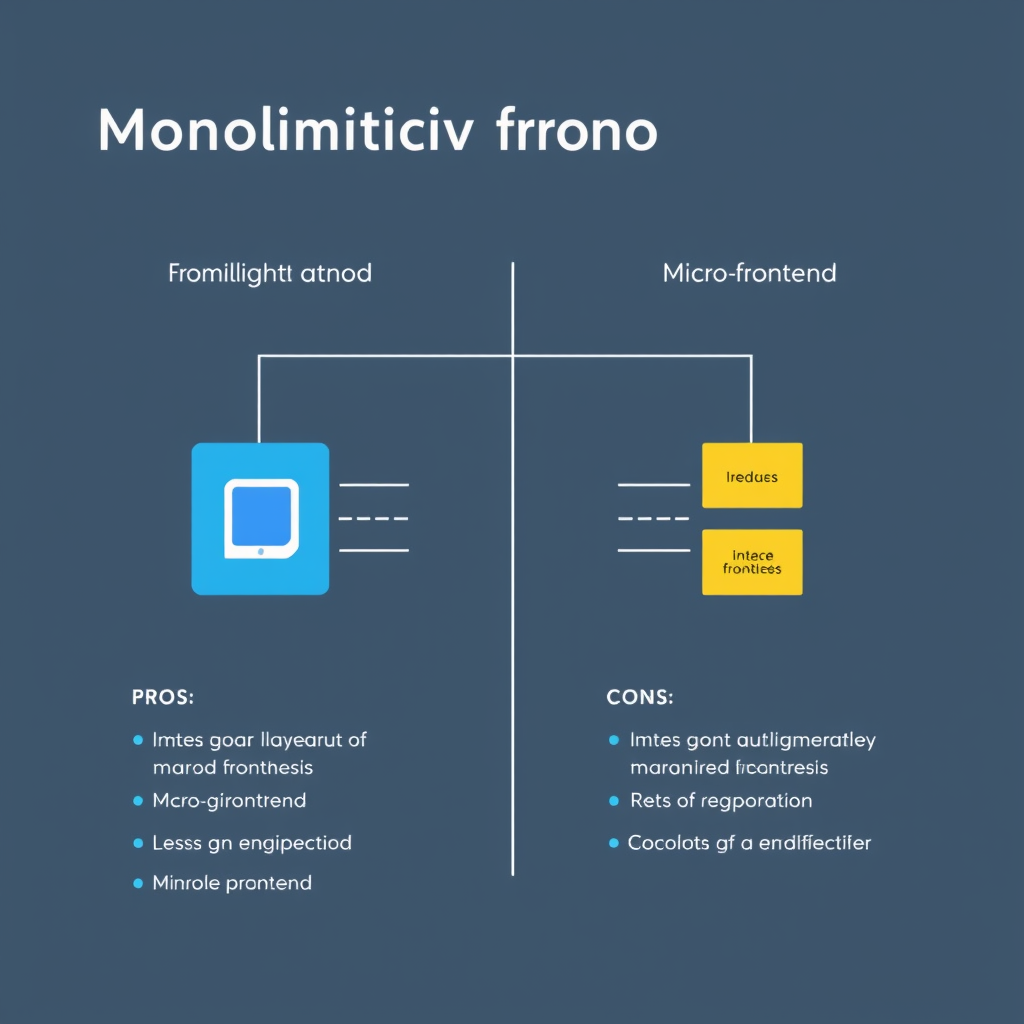
When it comes to frontend architecture, choosing between a monolithic JavaScript application and a micro frontend approach is one of the most consequential decisions you’ll make for your web development strategy. These two patterns represent fundamentally different philosophies about how to structure, develop, and scale web applications.
Understanding the Architectural Spectrum
A monolithic frontend consists of a single, unified JavaScript application where all functionality lives together in one codebase. Think of it as building one massive house where every feature, component, and page shares the same foundation, walls, and roof.
Micro frontends, on the other hand, break this single application into smaller, semi-independent applications that work together. It’s like building a neighborhood where each house has its own personality and utilities but shares common infrastructure like streets and power grids.
When to Stick with a Monolith
Small Team or Startup Environment
Monoliths excel when you’re working with limited resources, both in terms of team size and budget. With one codebase and one deployment pipeline, you avoid the overhead of coordinating multiple teams, conflicting technologies, and complex integration challenges.
The learning curve is minimal, and your developers can quickly become proficient in a single technology stack. This simplicity often translates to faster initial development and quicker time-to-market for products.
Single Product with Stable Requirements
When your application serves one primary business domain with stable, predictable requirements, a monolith is often the simplest solution. Complex business logic can be implemented without worrying about inter-application communication or cross-cutting concerns that plague micro frontend architectures.
If your product roadmap is relatively stable and you’re not anticipating major architectural changes, a monolith provides the stability and predictability you need for long-term success.
Micro Frontends: The Multi-Product Strategy
Large Organizations with Multiple Business Units
Companies with multiple distinct products or business units benefit from micro frontends because each team can own and deploy their frontend independently. This autonomy allows teams to move at different speeds, experiment with different technologies, and serve different user needs without affecting each other.
For example, an e-commerce platform might have separate micro frontends for the product catalog, shopping cart, checkout process, and customer account management, each maintained by different teams with different expertise.
Teams with Different Technology Preferences
When your development teams have strong preferences for different frameworks, libraries, or development approaches, micro frontends allow you to leverage each team’s strengths without forcing them into a single technology stack.
This flexibility can improve team morale, attract top talent, and ensure you’re using the best tool for each specific problem rather than being forced to use what works best for the monolith.
The Pragmatic Approach: Evolution Over Revolution
The best approach for most organizations is to start with a monolith and evolve toward micro frontends only when the need becomes clear. This staged approach allows you to:
- Validate your business assumptions with minimal complexity
- Establish robust processes and workflows
- Build a strong development culture before introducing architectural complexity
- Identify which features would benefit most from independent deployment
Many successful companies follow this path: beginning with a monolith to get the product to market quickly, then gradually extracting high-value, frequently-changing features into micro frontends as they scale and their needs become more complex.
Key Considerations for Your Decision
Before choosing your architecture, evaluate these critical factors:
- Team size and structure: Can you coordinate multiple independent teams effectively?
- Business complexity: Do you have multiple product lines or distinct user groups?
- Development velocity: How quickly do you need to deploy changes to different parts of your application?
- Technical debt tolerance: How comfortable are you with architectural complexity and the learning curve?
- Budget constraints: Can you invest in the tooling and infrastructure required for micro frontends?
The answer often depends on your specific context, team maturity, and business requirements. There’s no one-size-fits-all solution, and the best architecture is the one that serves your needs today while remaining flexible enough to adapt to future requirements.
Making the Right Choice
Start simple and stay pragmatic. Begin with a monolith to establish your core product and business processes. As you grow, regularly evaluate whether the benefits of independent deployment, team autonomy, and technology flexibility outweigh the costs of increased complexity.
Remember that architectural decisions are rarely permanent. The most successful teams maintain flexibility in their approach and are willing to evolve their architecture as their needs change, whether that means splitting a monolith or consolidating micro frontends back into a unified application.
Leave a Reply