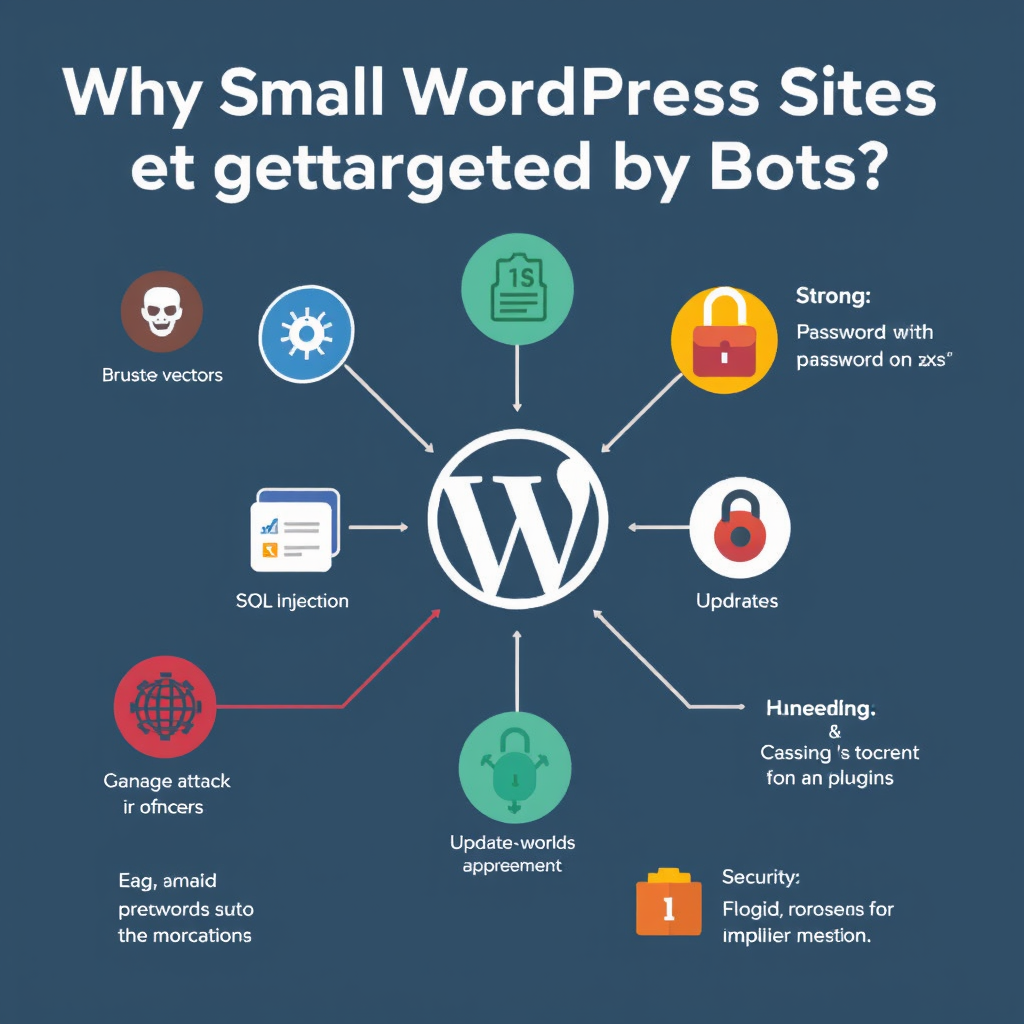
Small WordPress sites get targeted by bots for several specific reasons that make them attractive, easy targets for automated attackers.
Why Bots Prefer Small WordPress Sites
The bot threat landscape isn’t random – bots specifically hunt for small WordPress sites because they offer the lowest resistance. Here’s what makes small sites appealing targets:
- Outdated Software: Small sites often run older WordPress versions, themes, and plugins with known vulnerabilities that bots can exploit automatically.
- Limited Security Resources: Small site owners typically have tighter budgets and less technical expertise to implement robust security measures.
- Common Configurations: Many small sites use similar setups (WordPress + popular themes/plugins), making it easy for bots to write one attack that hits multiple targets.
- Lower Detection Risk: Automated attacks on small sites are less likely to trigger security alerts or get noticed by larger security monitoring systems.
- Higher Success Rates: Studies show that 40% of WordPress sites have at least one vulnerability, and many small sites never apply security patches.
Bot attackers use sophisticated scanning tools that systematically probe the internet for WordPress sites, checking for common weaknesses like unpatched core, themes with known exploits, or misconfigured security settings.
Types of Bots Targeting WordPress Sites
Not all bots are harmful. But understanding the different types helps you focus your defenses on real threats.
Malicious Bots are the most concerning for small site owners. They include:
- Scanner Bots that probe for vulnerabilities in WordPress core, themes, and plugins
- Crawler Spammers that attempt to inject malicious content into comments or posts
- Credential Stuffers that test stolen passwords against WordPress logins
- SEO Bots that manipulate search rankings through spammy backlinks or content
- Distributed Denial-of-Service (DDoS) Bots that overwhelm site resources
Benign Bots are actually helpful and necessary for a healthy website:
- Search engine crawlers (Googlebot, Bingbot) that index your content
- Social media bots that preview and share your content
- Analytics bots that track visitor behavior
- Security scanners that help you find vulnerabilities
What Actually Helps Protect Small WordPress Sites
Good news: most bot attacks on small WordPress sites are preventable with basic but effective security practices. Here’s what actually works:
Keep Everything Updated
Outdated software is the #1 vulnerability bots exploit. WordPress releases regular security patches, but you need to install them promptly.
- Enable automatic core updates in WordPress
- Set up theme and plugin auto-updates where available
- Use a version control system to track changes before major updates
- Keep backups current so you can quickly restore if something goes wrong
Use Strong Passwords and Two-Factor Authentication
Bot credential stuffing attacks succeed because many sites still use weak passwords. Strong authentication stops these attacks before they start.
- Use password managers to generate unique, complex passwords for each service
- Implement two-factor authentication (2FA) for all user accounts, especially admin access
- Use passwordless login options like Google Authenticator or Authy when possible
- Change default admin usernames and avoid using “admin” or “administrator”
Install a Security Plugin
Security plugins provide essential protection that most small site owners would implement manually if they had the expertise.
- Wordfence, iThemes Security, or Sucuri for comprehensive protection
- Free versions offer basic firewall and malware scanning
- Paid versions include real-time threat intelligence and automatic remediation
- Look for plugins that offer brute force protection, malware scanning, and security hardening
Secure Your Login Process
Login pages are prime targets for bot attacks. Simple security measures can dramatically reduce successful bot attempts.
- Install reCAPTCHA to prevent automated login attempts
- Limit login attempts with account lockout after failed attempts
- Use WordPress’ built-in login security features
- Consider disabling XML-RPC API if you don’t need it (prevents Brute Force attacks)
Implement Web Application Firewall (WAF)
A WAF acts as a proxy between your site and the internet, filtering malicious traffic before it reaches your WordPress installation.
- Cloudflare, Sucuri, or AWS WAF provide effective protection
- WAFs can block known malicious bots and attack patterns automatically
- Most services offer free tiers suitable for small sites
- WAFs also provide DDoS protection and improved performance
Secure File Uploads and Themes
Bots exploit insecure file uploads and vulnerable themes. Restricting what can be uploaded and keeping themes clean prevents these attacks.
- Disable file uploads unless absolutely necessary
- Only upload files from trusted sources
- Use themes and plugins from reputable sources only
- Remove unused themes and plugins completely
- Check file permissions to prevent unauthorized modifications
The Reality of Bot Protection
Bot protection isn’t about creating an impenetrable fortress—it’s about making your site a difficult target that’s not worth the effort for automated attackers. Most successful bot attacks target sites with:
- Outdated software (easy to exploit)
- Weak passwords (easy to guess)
- No security monitoring (attacks go unnoticed)
- Poor security practices (inconsistent protection)
Your goal is to be the opposite of an easy target. Even basic security measures that most small site owners overlook will dramatically reduce bot attack success rates.
Start with the basics: update everything, use strong passwords with 2FA, install a security plugin, and monitor for suspicious activity. These four steps alone can prevent 90% of automated bot attacks targeting WordPress sites.
Monitoring and Response
Even with strong protection, you should still monitor for bot activity and have a response plan ready.
- Use security plugins that alert you to suspicious activity
- Monitor login attempts and failed authentication
- Watch for unusual traffic spikes that might indicate DDoS attacks
- Keep backups current for quick recovery if compromised
- Have a documented incident response plan
Remember that bot protection is an ongoing process, not a one-time setup. As attack techniques evolve, so should your security measures.
Small WordPress sites can maintain strong security with relatively simple measures. The key is being consistent, staying updated, and never assuming you’re too small to be targeted.
Leave a Reply