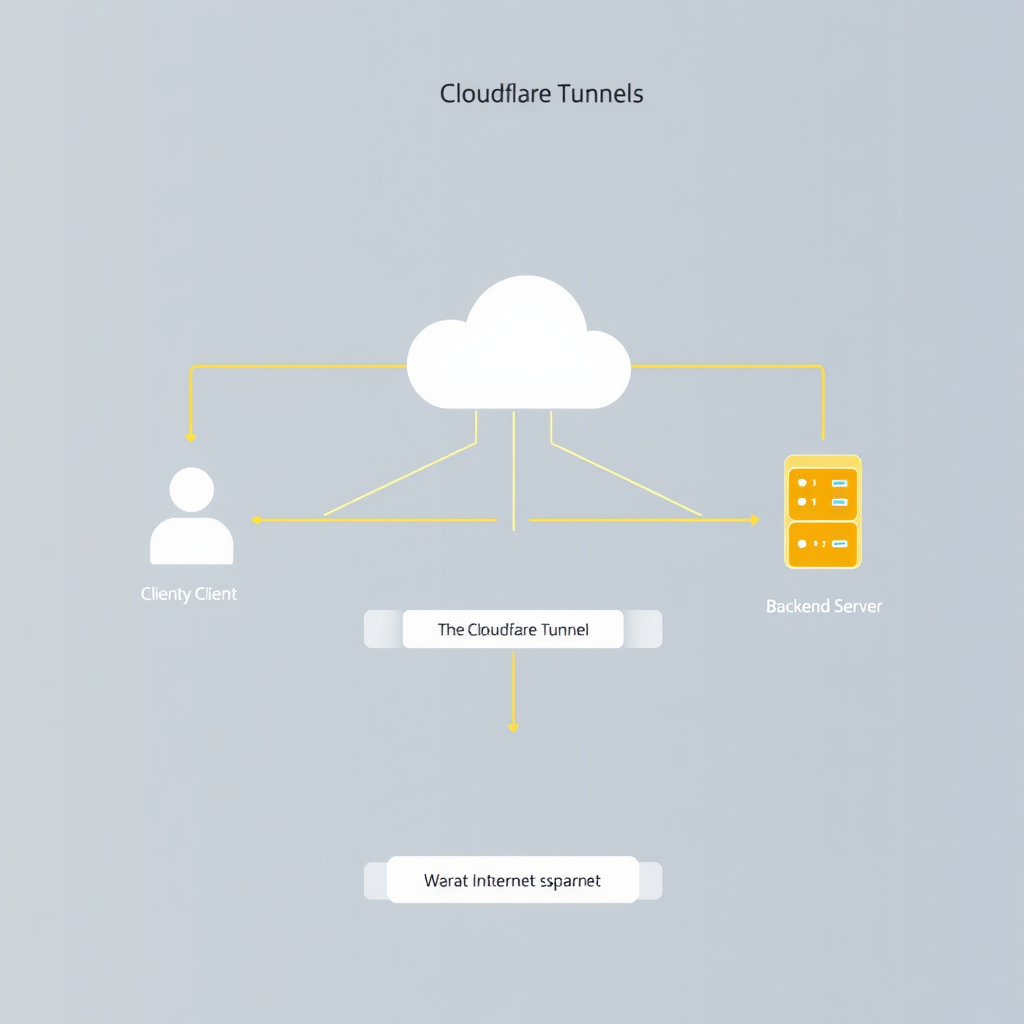
If you’ve been exploring modern web infrastructure, you might have come across the term “Cloudflare Tunnel” and wondered what it actually is. Cloudflare Tunnels are a powerful tool that allow you to securely expose local services to the internet without opening up your firewall or exposing your public IP address.
Understanding the Core Concept
At its simplest level, a Cloudflare Tunnel creates a secure, encrypted connection between your local machine or private network and Cloudflare’s global edge network. Instead of directly connecting to your server’s public IP (which would require port forwarding and expose your network), you connect through Cloudflare’s infrastructure, which acts as a secure intermediary.
Key Components of a Cloudflare Tunnel
There are a few key components that make Cloudflare Tunnels work effectively:
- Cloudflare Access: Manages who can access your applications through identity-based access controls.
- Tunnel Servers: Run on Cloudflare’s edge network and securely relay traffic to your origin.
- Client Connectors: Software you install on your local machine or server that establishes the tunnel.
- Tunnel Configuration: Defines which origins are accessible and how traffic is routed.
Why Use a Cloudflare Tunnel
1. Enhanced Security
The primary benefit of Cloudflare Tunnels is security. Instead of exposing your application directly to the internet, you connect through Cloudflare’s secure infrastructure, which:
- Eliminates the need for public IP addresses
- Provides built-in DDoS protection
- Offers SSL/TLS encryption by default
- Hides your true network location
2. Simplified Network Configuration
Traditional port forwarding can be complex and error-prone. With Cloudflare Tunnels, you don’t need to:
- Configure firewalls to allow specific ports
- Deal with NAT traversal issues
- Expose your internal network to the public internet
- Worry about IP-based restrictions
3. Flexibility and Control
Cloudflare Tunnels offer flexibility that traditional methods lack:
- Access your applications from anywhere in the world
- Use multiple tunnels for different applications
- Route traffic through specific Cloudflare locations
- Control access through Cloudflare Access policies
Common Use Cases
Cloudflare Tunnels are particularly useful for several scenarios:
- Local Development: Expose localhost applications to the internet for testing or demos
- Internal Tools: Securely access admin panels or internal dashboards from anywhere
- IoT Management: Connect to devices behind NAT without complex firewall rules
- Backup and Replication: Securely sync data between remote locations
- Testing and Staging: Create temporary environments that are accessible for QA
Getting Started with Cloudflare Tunnels
To start using Cloudflare Tunnels, you’ll need to:
- Create a Cloudflare account
- Set up a tunnel using the cloudflared daemon
- Configure access rules and applications
- Test the connection through Cloudflare’s edge network
The best part is that you don’t need any advanced networking knowledge to get started. Cloudflare handles the complex infrastructure details while you focus on building great applications.
When NOT to Use a Cloudflare Tunnel
While powerful, Cloudflare Tunnels aren’t right for every situation. Avoid using them if you:
- Need ultra-low latency for real-time applications
- Are serving high-volume static content
- Require direct IP address access for legacy applications
- Have applications that don’t need internet exposure
For these cases, traditional hosting or direct connections might be more appropriate.
Conclusion
Cloudflare Tunnels represent a significant evolution in how we think about secure internet access. By leveraging Cloudflare’s global infrastructure while keeping your origin servers private and secure, they solve many of the networking challenges that developers and system administrators face every day.
Whether you’re a developer testing local applications, an administrator managing internal tools, or an organization looking for secure remote access, Cloudflare Tunnels offer a modern solution that combines security, simplicity, and flexibility.
Leave a Reply