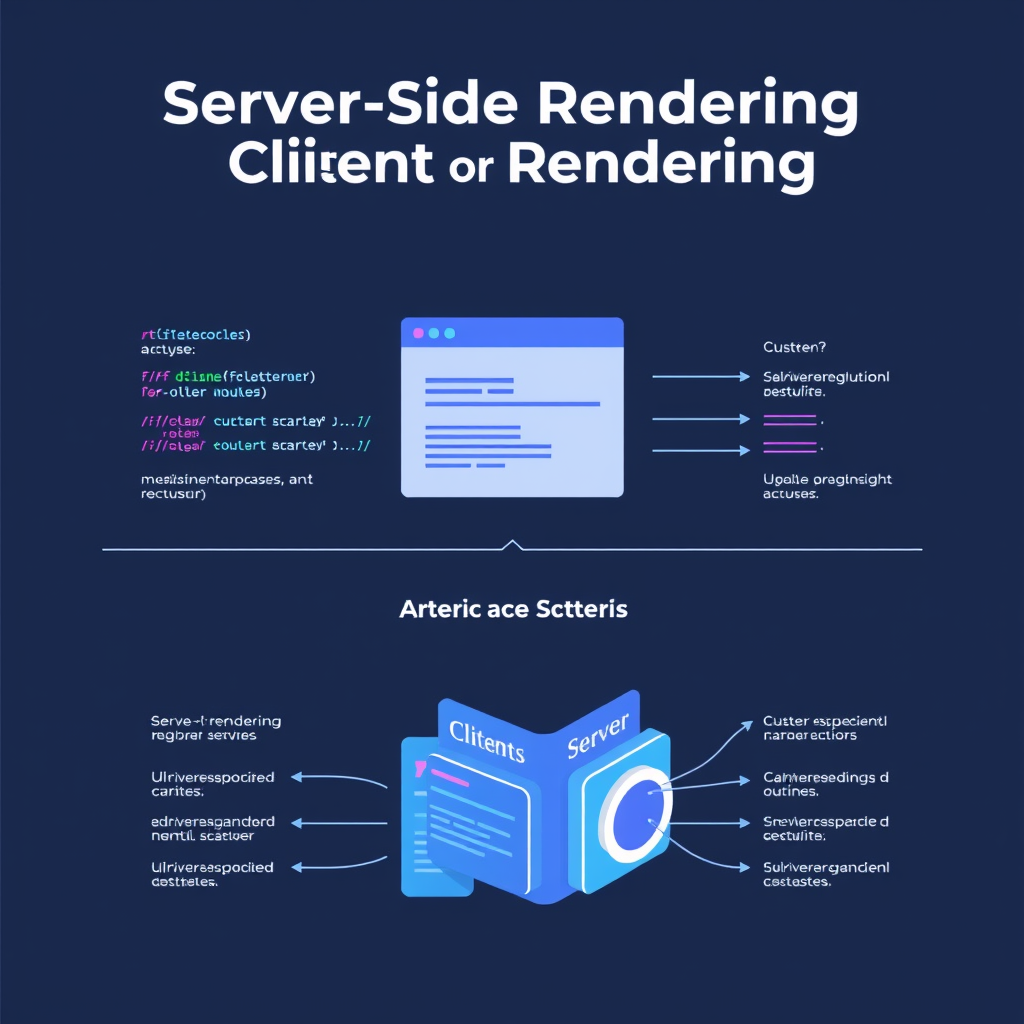
Server-Side Rendering (SSR) and Client-Side Rendering (CSR) represent two fundamentally different approaches to how web applications deliver content to users. Each has distinct advantages and trade-offs that make them better suited for specific use cases. Understanding these differences helps developers choose the right approach for their particular needs.
What is Server-Side Rendering?
Server-Side Rendering generates the complete HTML of a web page on the server before sending it to the user’s browser. This means the server produces a fully rendered page that the browser can immediately display, similar to traditional HTML websites.
What is Client-Side Rendering?
Client-Side Rendering delivers a minimal HTML skeleton with the main application logic (typically JavaScript) and then renders the page entirely in the user’s browser. The server acts mainly as an API provider, and the browser handles the DOM manipulation and rendering.
When to Choose Server-Side Rendering
- SEO Performance: Search engines can easily index fully rendered HTML pages, making SSR ideal for content-heavy sites that need strong search visibility.
- First Contentful Paint: SSR typically provides faster initial loading times since the browser receives complete HTML immediately.
- Slow Connections: Users with poor internet connectivity benefit from SSR as they receive complete pages rather than waiting for large JavaScript bundles.
- Progressive Enhancement: SSR provides a solid foundation that works even with JavaScript disabled.
When to Choose Client-Side Rendering
CSR shines in specific scenarios where dynamic interactivity and performance optimization are paramount:
- Dynamic Applications: Single-page applications (SPAs) that require frequent updates without full page reloads.
- Complex State Management: Applications with sophisticated client-side state that needs to react to user interactions in real-time.
- Mobile-First Experiences: Native-like mobile applications where smooth transitions and animations are critical.
- Offline Capabilities: Service workers and offline-first applications that need to function without internet connectivity.
Hybrid Approaches and Modern Solutions
Modern web frameworks have introduced hybrid approaches that combine the best of both worlds. Solutions like Next.js, Nuxt.js, and Remix allow developers to opt into SSR for specific routes while using CSR for others, providing flexibility based on individual page requirements.
Performance Considerations
Performance isn’t just about initial load times. SSR typically offers better Time to First Contentful Paint (FCP) but may result in slower subsequent navigation within the application. CSR provides smoother transitions between views but requires significant initial JavaScript download and processing time.
Development Experience
SSR can be more predictable for SEO and debugging since the HTML is server-generated. CSR provides a more dynamic development experience with immediate visual feedback and easier state management across complex interactions. However, CSR debugging can be challenging due to the complexity of client-side rendering issues.
Conclusion: Making the Right Choice
The choice between SSR and CSR ultimately depends on your specific use case, performance requirements, and development priorities. Many modern applications use a hybrid approach, implementing SSR for critical pages like landing pages and home routes while leveraging CSR for the application’s core features and user interfaces.
By understanding the strengths and weaknesses of each approach, you can make informed decisions that optimize both user experience and development efficiency. The goal isn’t always to choose one over the other, but to create the most effective solution for your specific application needs.
Leave a Reply