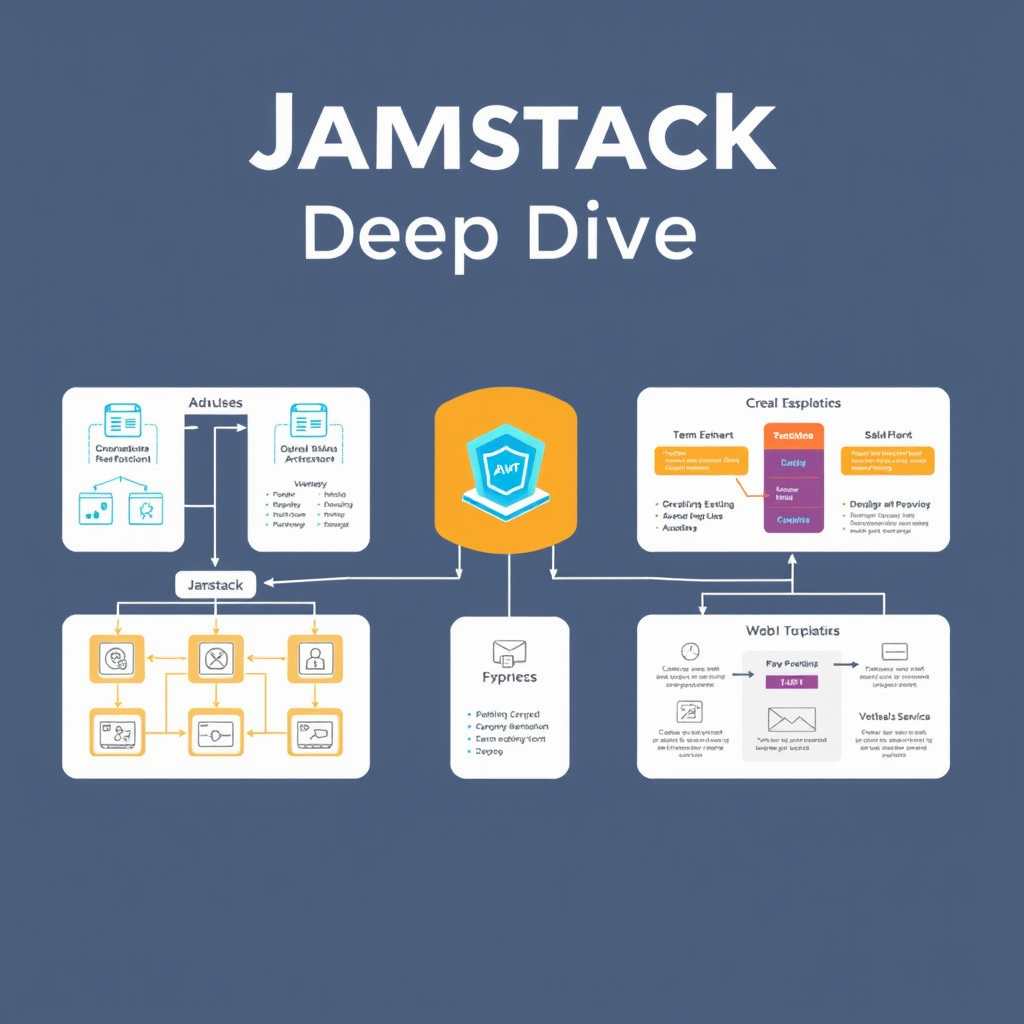
Jamstack architecture has revolutionized modern web development, offering a performant, secure, and scalable approach that goes beyond the traditional client-server model. By decoupling content delivery from dynamic functionality, Jamstack enables developers to build websites that deliver exceptional user experiences while maintaining developer productivity.
Core Jamstack Principles for Advanced Implementation
At its foundation, Jamstack relies on three core principles: pre-rendered pages, serverless functions, and a delivery CDN. However, advanced implementation requires understanding how these components interact to create sophisticated architectures that handle complex requirements like authentication, real-time data, and multi-tenant scenarios.
Pre-rendering Strategies Beyond Static Sites
Modern Jamstack implementations go far beyond simple static site generation. Advanced pre-rendering techniques include incremental static regeneration (ISR), which allows selective updating of static pages without a full rebuild, and edge CDN caching strategies that ensure optimal performance across global locations. These approaches enable developers to maintain the benefits of static sites while handling dynamic content requirements.
- Incremental Static Regeneration (ISR) for dynamic content updates
- Edge CDN caching with intelligent invalidation strategies
- Hybrid rendering models that combine SSG and SSR
- Contentful frameworks optimized for performance
Serverless Functions as Architectural Building Blocks
Serverless functions serve as the backbone for dynamic functionality in Jamstack applications. Advanced patterns include function composition, where multiple small functions work together to handle complex business logic, and multi-tier serverless architectures that separate concerns like authentication, data processing, and external API integration.
Key best practices for serverless functions include:
- Function as a single business responsibility
- Proper error handling and logging
- Caching strategies at the edge
- Circuit breakers and retries for external dependencies
Advanced Authentication and Authorization Patterns
Authentication in Jamstack applications requires careful consideration of security and user experience. Advanced patterns include token-based authentication with JWT, integration with third-party identity providers, and edge middleware for session management. These approaches ensure secure access while maintaining the performance benefits of edge delivery.
Edge Middleware: The Secret Sauce of Modern Jamstack
Edge middleware represents one of the most powerful features of modern Jamstack architectures. By deploying logic to the CDN edge, developers can perform real-time decisions on traffic, routing, authentication, and dynamic content generation without the latency of traditional server-side processing.
- Traffic routing and geographic distribution
- Authentication and authorization checks
- AB testing and feature flags
- Dynamic content personalization
Multi-tenant and Headless CMS Integration Patterns
Advanced Jamstack implementations often need to support multiple clients or sites from a single codebase. This requires sophisticated patterns for data isolation, content management, and API routing. Headless CMS integration enables flexible content management while maintaining the performance benefits of static generation.
Performance Optimization Techniques
Achieving exceptional performance in Jamstack applications requires more than just static generation. Advanced optimization techniques include image optimization at the edge, advanced caching strategies, bundle analysis, and core web vitals monitoring. These practices ensure that Jamstack applications deliver the best possible user experience.
Modern Tooling and Framework Selection
The Jamstack ecosystem has matured significantly, offering a wide range of tools and frameworks. Modern implementations benefit from frameworks like Next.js, Astro, and SvelteKit, each with unique strengths for different use cases. Choosing the right combination of tools is crucial for building scalable, maintainable applications.
Essential tooling considerations include:
- Build tools and CI/CD pipelines
- Content management solutions
- Testing and monitoring tools
- Performance analytics and optimization
Future-Proofing Your Jamstack Architecture
As web development continues to evolve, Jamstack architectures must be designed with future requirements in mind. This includes considerations for edge computing, AI integration, and the evolving landscape of web standards. Building flexible, modular architectures ensures that your Jamstack applications can adapt to future technological advances.
Key future-proofing strategies include:
- Modular, composable architecture patterns
- API-first approach for extensibility
- Edge computing integration
- Continuous learning and adaptation
Conclusion: Jamstack as a Strategic Advantage
Jamstack architecture represents more than just a technical approach—it’s a strategic advantage for organizations that want to deliver exceptional digital experiences. By embracing advanced patterns and best practices, developers can build applications that are performant, secure, scalable, and future-proof. The evolution of Jamstack continues, and those who master its advanced capabilities will be well-positioned to build the next generation of web applications.
Leave a Reply