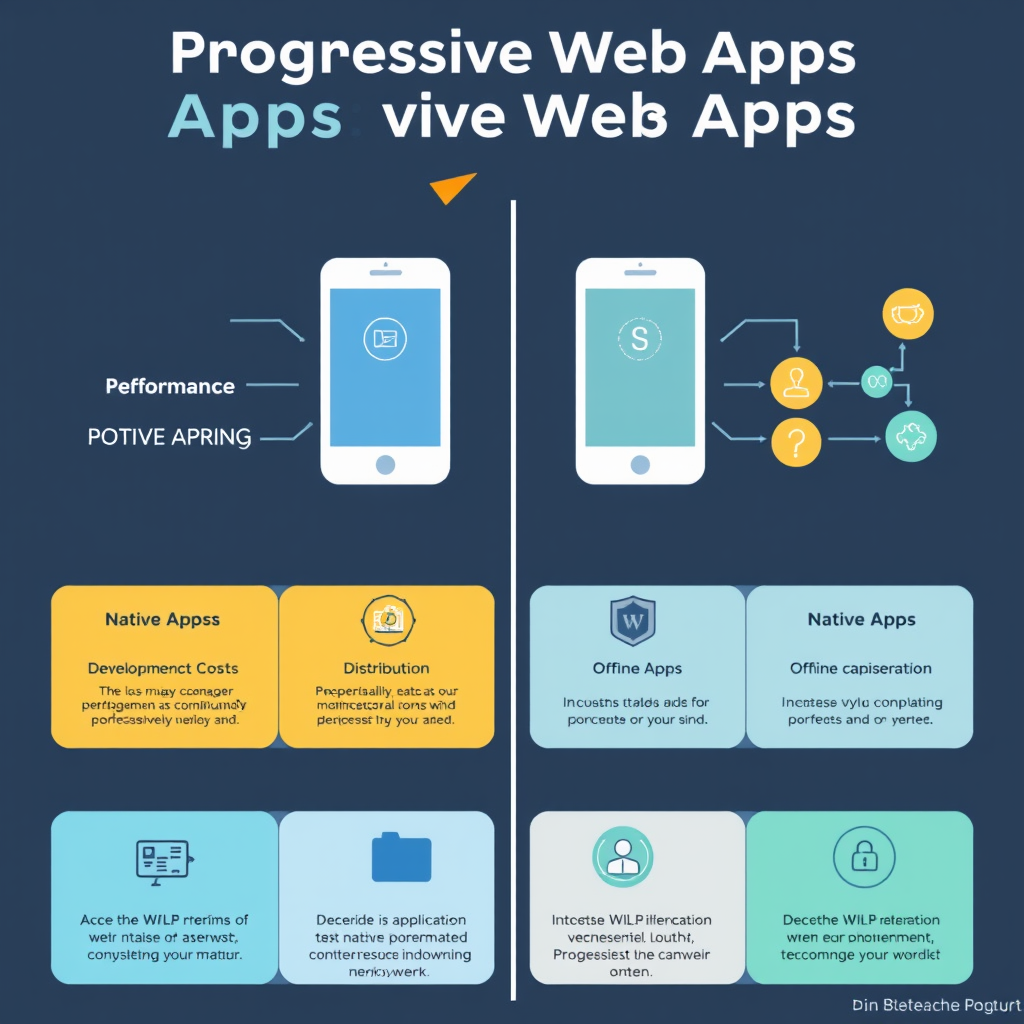
The modern web development landscape presents developers with a crucial decision: should they build Progressive Web Apps (PWAs) or native applications? Each approach offers distinct advantages and trade-offs that impact performance, user experience, development costs, and maintenance requirements.
Performance and User Experience
Progressive Web Apps bridge the gap between web and native experiences, delivering app-like performance directly through browsers. These applications load quickly, work offline, and provide smooth transitions between states. PWAs leverage modern web APIs like Service Workers for caching and background synchronization, creating experiences that feel native while maintaining web accessibility.
Native applications, however, offer superior performance for intensive tasks like gaming, AR/VR, or complex computations. They have direct access to device hardware, can utilize native APIs for camera, sensors, and GPS, and provide the fastest possible user interactions without browser overhead. Native apps excel when maximum performance and device integration are critical.
Development and Maintenance
One of PWAs’ greatest advantages lies in their single codebase approach. Developers write once and deploy across multiple platforms—iOS, Android, and desktop browsers—significantly reducing development time and costs. Updates are instant and don’t require users to download new versions, ensuring everyone always has the latest features.
Native development requires separate codebases for each platform, typically using Swift/Objective-C for iOS, Kotlin/Java for Android, and different programming languages for various desktop platforms. This approach increases development complexity, doubles (or triples) maintenance requirements, and creates version fragmentation challenges across different OS versions.
Distribution and discoverability
Progressive Web Apps shine in discoverability. Users can find PWAs directly through search engines, link sharing, or browser homescreens without visiting app stores. This reduces friction in user acquisition and eliminates approval processes, vetting requirements, and platform commission structures that app stores typically impose.
Native applications benefit from app store ecosystems that provide built-in distribution channels, credibility, and trust signals. App stores offer discoverability through curated categories, review processes, and recommendation algorithms. However, app stores also require submission processes, periodic updates, and compliance with platform guidelines that can delay feature releases.
Offline capabilities and connectivity resilience
Progressive Web Apps excel in environments with unreliable internet connectivity. Through Service Workers and offline caching strategies, PWAs can continue functioning even when users lose network access. This makes PWAs ideal for applications that need to work in developing regions, during travel, or in areas with unstable internet infrastructure.
While modern native applications also support offline functionality, they typically require more complex implementation strategies and often need periodic internet connectivity for critical updates or synchronization. Native apps generally perform better when offline capabilities are limited to cached content rather than full application functionality.
Security considerations
Both PWAs and native applications must address security concerns, but they face different threat models. PWAs inherit browser-based security models that provide sandboxed execution environments, automatic XSS protections, and regular security updates from browser vendors.
Native applications require platform-specific security implementations and face unique challenges like binary tampering detection, root/jailbreak detection, and permission management. While native apps can implement more robust security measures, they also present larger attack surfaces due to direct hardware access and system-level permissions.
When to Choose PWAs
Choose Progressive Web Apps when your primary goals include rapid market entry, cross-platform coverage with a single codebase, offline functionality, and reduced development costs. PWAs excel for content-focused applications, e-commerce sites, news apps, and services where broad accessibility and instant updates outweigh the need for maximum performance or advanced device integration.
When to Choose Native Apps
Opt for native applications when you need maximum performance for intensive computing tasks, deep device integration (camera, sensors, AR/VR), complex offline capabilities, or when targeting specific platform features unavailable through web APIs. Native apps are essential for gaming, professional applications, multimedia editing tools, and any software where performance, user experience, or device hardware access are critical differentiators.
The future convergence
The distinction between PWAs and native apps continues to blur as web capabilities expand and native development approaches evolve. Technologies like WebAssembly are narrowing performance gaps, while native frameworks like React Native and Flutter increasingly use web-like implementations. The optimal choice may often involve hybrid strategies, using PWAs for core functionality and native apps for performance-critical features or platform-specific implementations.
Ultimately, the decision between PWAs and native apps should align with your specific project requirements, target audience needs, development resources, and long-term maintenance considerations. In many cases, a progressive approach that starts with a PWA and adds native functionality as needed provides the best balance of flexibility, performance, and user satisfaction.
Leave a Reply