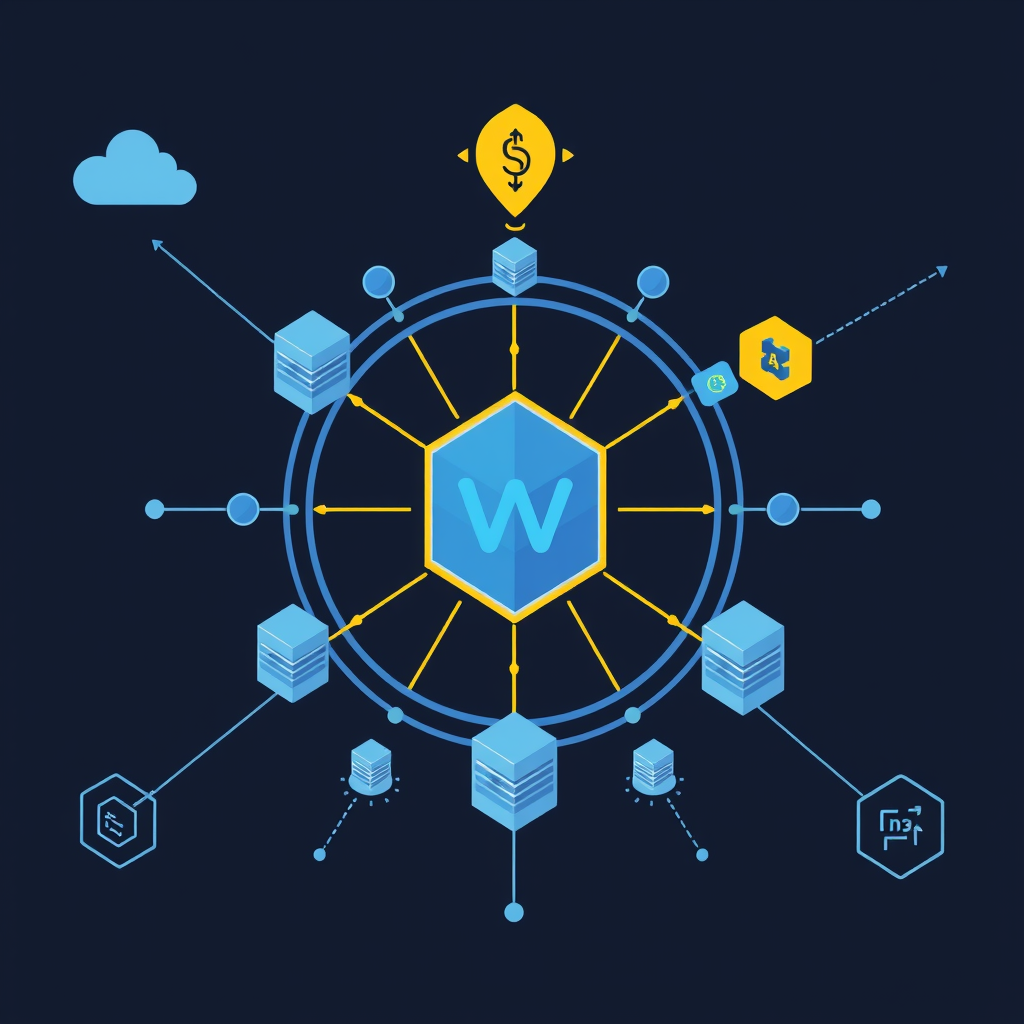
Web3 represents a fundamental shift in how we think about the internet, moving away from centralized control toward decentralized, peer-to-peer networks. At the heart of this transformation is decentralized storage, which promises to revolutionize how content is stored, accessed, and delivered across the web. This guide explores the core principles of decentralized storage and its practical impact on modern content delivery.
What is Decentralized Storage?
Decentralized storage eliminates the need for single points of failure by distributing data across multiple nodes in a network. Unlike traditional cloud storage that relies on centralized data centers owned by corporations like Amazon, Google, or Microsoft, decentralized storage leverages the unused capacity of individual computers, making the system more resilient, transparent, and economically efficient.
Key Technologies Behind Decentralized Storage
1. IPFS (InterPlanetary File System)
IPFS is the most widely adopted decentralized storage protocol. Instead of addressing files by location (URLs), IPFS uses content-addressing – every file gets a unique hash based on its content. This means identical files across the network share the same identifier, preventing duplication and ensuring content integrity.
When you upload a file to IPFS, it gets distributed across the network. Other nodes can retrieve it using its content hash, creating a resilient, distributed file system that’s immune to single-point failures.
2. Filecoin
Filecoin builds on IPFS by introducing a market-based storage network. Miners offer storage space, and retrievers pay for accessing that storage. This creates economic incentives for maintaining long-term, reliable storage while providing users with cost-effective alternatives to traditional cloud providers.
3. Arweave
Arweave focuses on permanent data storage. Using a proof-of-access consensus mechanism, it allows users to store data permanently at low cost. Once stored, data becomes truly immutable – perfect for digital art, historical records, and important documents that need to last for generations.
How Decentralized Storage Impacts Content Delivery
1. Enhanced Performance and Speed
Traditional content delivery networks (CDNs) rely on a limited number of data centers. Decentralized storage can distribute content to nodes closer to end users, reducing latency. When content is already available on nearby nodes, users access it faster without traversing multiple network hops.
2. Resilience Against Outages
With data distributed across thousands of independent nodes, the risk of service disruption drops dramatically. If some nodes go offline, content remains available from other locations. This redundancy makes websites and applications truly unstoppable.
3. Cost Efficiency
Traditional cloud storage prices can be prohibitive for large media libraries or high-traffic websites. Decentralized storage allows you to pay only for what you use, with market rates often significantly lower than enterprise cloud solutions. Content distribution also becomes cheaper as bandwidth costs are shared across the network.
4. Censorship Resistance
In regions with strict internet controls, decentralized storage provides a powerful tool for free expression. Content stored across a global network of nodes cannot be easily removed or blocked, preserving access to information regardless of geographical or political restrictions.
Practical Applications for Web Developers
Integrating decentralized storage into your workflow doesn’t have to be complex. Here are some practical approaches:
- Static Site Hosting: Deploy static sites to IPFS for instant, worldwide distribution
- Media Storage: Store images, videos, and other large assets in decentralized networks
- Digital Collectibles: Use Arweave for storing NFT metadata and artwork
- Backup Solutions: Complement traditional backups with decentralized storage for critical data
- API Responses: Serve API responses from decentralized storage for improved reliability
Getting Started with Decentralized Storage
Start small by integrating IPFS into your workflow. Tools like Pinata and Infura provide user-friendly interfaces for interacting with decentralized storage networks without needing deep technical expertise. For development projects, consider using tools like Hardhat or Foundry for smart contract integration.
Remember that decentralized storage works best for certain types of content – particularly static assets, media files, and data that benefits from global distribution. For highly dynamic or frequently changing data, a hybrid approach combining traditional databases with decentralized storage often makes the most sense.
The transition to decentralized storage represents more than a technical upgrade – it’s a philosophical shift toward a more open, resilient, and democratic internet. By embracing these technologies today, developers can build the foundation for tomorrow’s web.
Leave a Reply