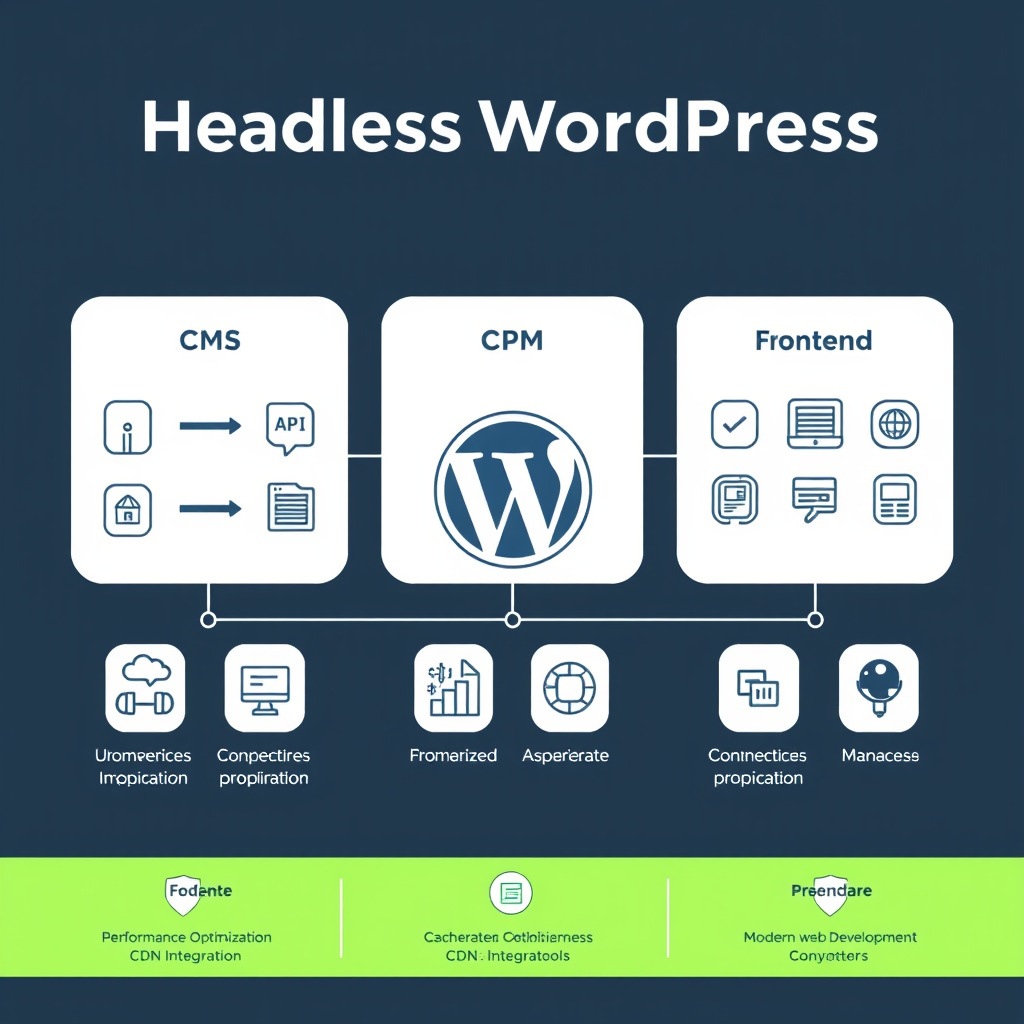
Headless WordPress has emerged as one of the most powerful approaches to modern web development, separating content management from presentation to deliver superior performance. This architectural pattern unlocks flexibility that traditional WordPress installations simply cannot match, enabling developers to build sites that are faster, more scalable, and more future-proof.
Understanding the Headless Architecture
At its core, a headless WordPress architecture consists of two distinct components: the Content Management System (CMS) and the Front-end delivery layer. The WordPress backend handles all content creation, management, and API interactions, while a separate front-end framework—whether it’s a static site generator, a custom JavaScript application, or a mobile app—consumes the content via REST or GraphQL APIs.
This separation creates a more modular system where each layer can be optimized independently, leading to performance gains that compound across the entire stack.
Key Architecture Patterns for Performance
1. Static Site Generation (SSG) with WordPress
Static Site Generation represents the most significant performance win in headless WordPress. By generating static HTML files at build time, SSG sites eliminate the need for server-side processing on every request.
With frameworks like Next.js, Gatsby, or Nuxt.js, you can pull content from WordPress APIs during the build process, creating completely static files that serve instantly to users. This approach reduces server load by 80-90% and delivers page loads that can compete with CDN-served static assets.
The key performance benefit comes from eliminating database queries, server-side rendering overhead, and dynamic content processing for each visitor.
2. Edge-Cached APIs with CDN Integration
Pairing WordPress APIs with a CDN creates a powerful caching layer that dramatically improves response times. By caching API responses at edge locations worldwide, you reduce latency for global audiences while maintaining the flexibility of dynamic content.
This pattern works especially well with GraphQL, which allows precise content fetching and reduces over-fetching. The combination of edge caching and efficient data querying can cut API response times by 50% or more.
3. Microfrontend Architecture
Microfrontends take the modularity concept to its logical extreme, breaking down the front-end into independent, deployable units. Each microfrontend can be developed, tested, and scaled independently while sharing WordPress content through standardized APIs.
This architecture enables teams to optimize performance by loading only the necessary components for each page, implementing lazy loading strategies, and isolating performance bottlenecks to specific modules rather than affecting the entire site.
Advanced Performance Optimization Patterns
1. Pre-rendering with Incremental Static Regeneration
Incremental Static Regeneration (ISR) represents the best of both worlds: the performance of static sites with the freshness of dynamic content. By allowing you to update static content without a full rebuild, ISR maintains high performance while supporting editorial workflows.
This pattern is ideal for content-heavy sites where some pages need frequent updates while maintaining excellent performance for the majority of your content.
2. Serverless Function Edge Handlers
Serverless functions positioned at the edge provide the ultimate combination of flexibility and performance. These functions can transform, cache, or modify content as it travels between WordPress and the end user, all while running at locations closer to your visitors.
This pattern enables real-time content transformations, personalized experiences, and intelligent caching strategies without maintaining traditional server infrastructure.
Implementation Best Practices
When implementing headless WordPress patterns, focus on these key principles:
- Start Simple, Iterate Fast. Begin with a basic headless setup and gradually introduce advanced patterns as you understand your performance requirements.
- Measure Before Optimizing. Establish baseline performance metrics before implementing changes to quantify the impact of each architectural decision.
- Balance Flexibility with Performance. Each additional layer of flexibility comes with a performance cost. Choose patterns that deliver the optimal balance for your specific use case.
- Implement Progressive Enhancement. Ensure your site maintains core functionality even if advanced features or APIs are unavailable.
- Plan for Content Evolution. Your content strategy will drive your architectural choices. Consider future content needs when selecting patterns.
By thoughtfully selecting and combining these architecture patterns, headless WordPress becomes more than just a trend—it’s a strategic advantage that delivers measurable performance improvements while maintaining the content management power that teams rely on.
The result is a web experience that loads faster, performs better under load, and provides the foundation for future innovation without sacrificing the ease of content management that makes WordPress so powerful.
Leave a Reply