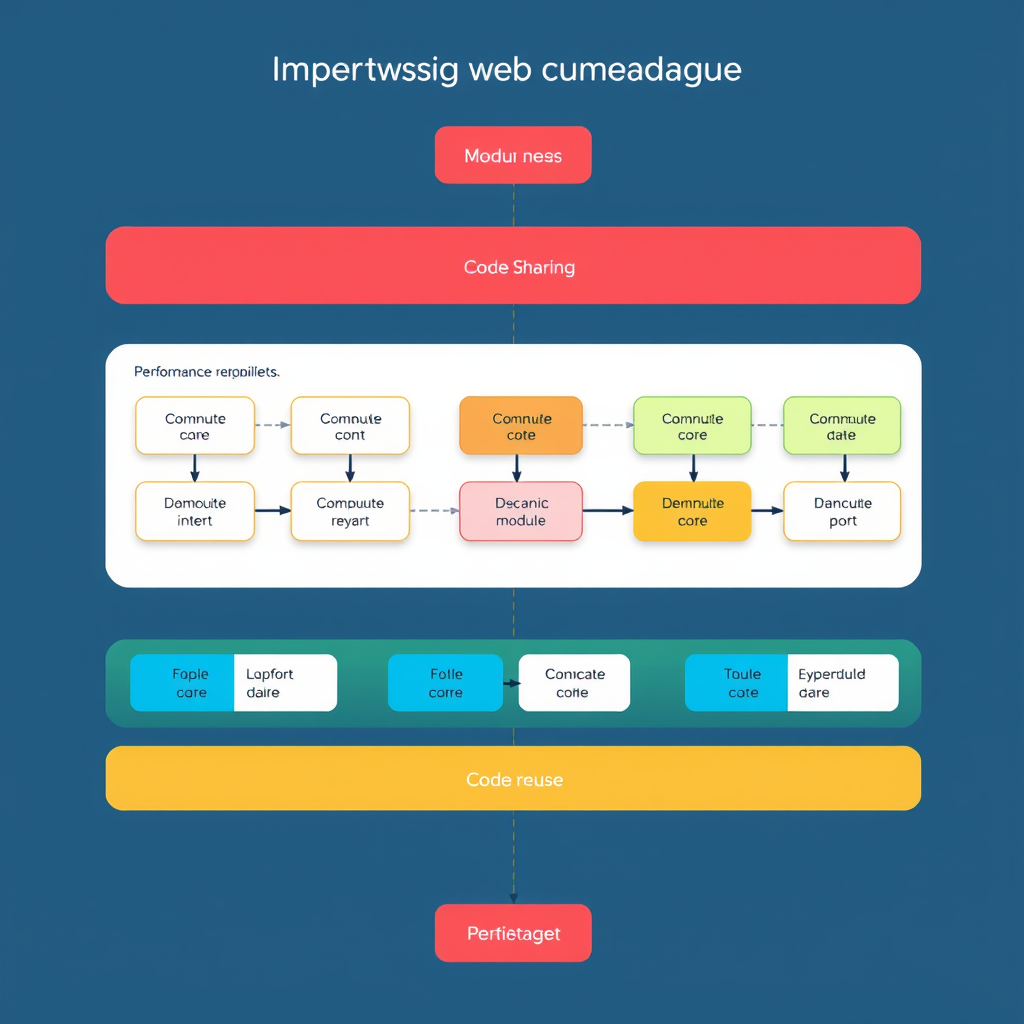
Web packaging and module federation represent the evolution of frontend architecture, moving beyond traditional bundling approaches to enable true code sharing and dynamic module composition across distributed applications.
What Is Web Packaging?
Web packaging is a fundamental shift in how we think about serving and consuming web assets. Instead of monolithic bundles that contain all application code, modern web packaging focuses on delivering fine-grained, versioned modules that can be efficiently cached and reused across different applications and domains.
Traditional bundling methods like Webpack create single large JavaScript files that contain every module your application needs. While effective, this approach leads to duplicated code, longer initial loads, and limited opportunities for sharing between applications.
Enter Module Federation
Module Federation is a revolutionary technique that allows different applications to share modules at runtime without needing to bundle them together. Think of it as microservices for frontend code—each application can provide some capabilities while consuming others from neighboring applications.
With Module Federation, a banking app might share its authentication module with a dashboard application, or multiple e-commerce sites could share a product catalog component. This eliminates code duplication and creates opportunities for truly modular frontend architectures.
Key Benefits of Module Federation
- Code Reusability: Share components and utilities across multiple applications
- Reduced Bundle Sizes: Applications only load the modules they actually need
- Faster Development: Teams can work on shared modules independently
- Runtime Flexibility: Applications can discover and consume modules dynamically
- Better Caching: Shared modules benefit from aggressive browser caching
Technical Implementation
Implementing Module Federation requires careful setup and configuration. The host application exposes its available modules through a special federation configuration, while remote applications advertise the modules they provide. At runtime, applications can remotely load and consume these shared modules.
Modern frameworks like React, Vue, and Angular all support Module Federation, but the implementation details vary. Most solutions use JSON configuration files to define which modules are exposed, the format they’re exposed in, and how they should be loaded by consumers.
Common Use Cases
Module Federation shines in specific scenarios. Monorepos with multiple frontend applications can share UI components, micro-frontends can collaboratively build larger applications, and organizations can create shared toolkits that standardize component usage across teams.
For example, a retail company might have a product search module that powers multiple e-commerce sites. By federating this module, each site can benefit from improvements and bug fixes made to the central module without redeploying their entire application.
Best Practices for Success
While powerful, Module Federation introduces complexity that must be carefully managed. Version compatibility is crucial—different applications using different versions of the same module can lead to runtime errors. Additionally, network latency becomes more important since applications must make cross-origin requests to load shared modules.
Start with a clear governance model and establish naming conventions for shared modules. Monitor module usage and performance carefully, as the distributed nature of federation can introduce new failure points. Consider implementing fallback mechanisms for scenarios where shared modules aren’t available.
The Future of Web Packaging
Web packaging and Module Federation are still evolving technologies, but their potential is undeniable. As browsers continue to improve module support and standards bodies work on formalizing these approaches, we can expect even more powerful capabilities for building the next generation of web applications.
The future likely includes better support for server-side module federation, enhanced security models for cross-origin module sharing, and tighter integration with modern JavaScript standards like ES Modules and Web Components.
By embracing web packaging and Module Federation today, organizations can position themselves at the forefront of frontend innovation, creating applications that are more modular, performant, and maintainable than ever before.
Leave a Reply