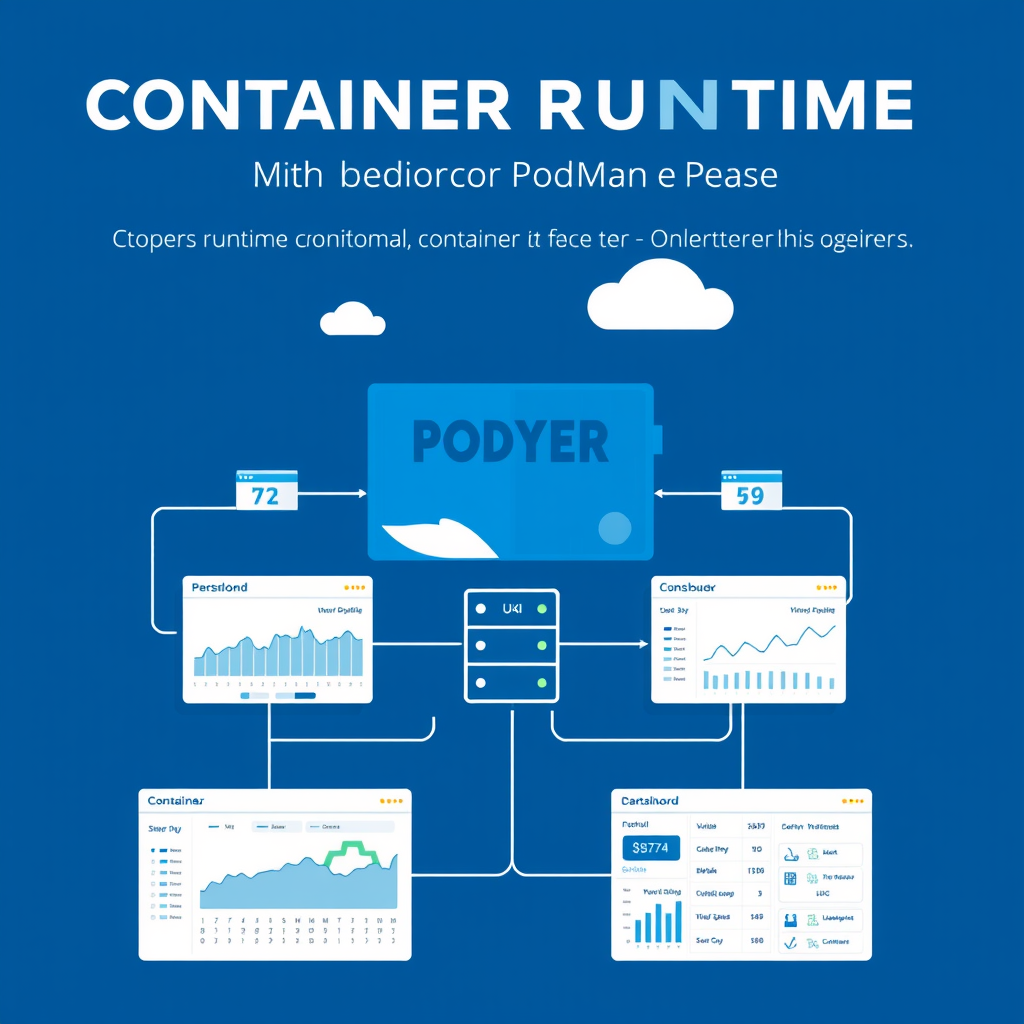
Container runtime optimization has become essential for developers and operations teams seeking to maximize efficiency, performance, and security in containerized environments. As container adoption continues to accelerate, mastering advanced Docker and Podman techniques separates high-performing organizations from the rest.
Container Runtime Fundamentals
Before diving into advanced optimizations, it’s crucial to understand the fundamentals that underpin container runtime performance. Container runtimes serve as the bridge between application code and the host operating system, managing container lifecycle, resource allocation, and isolation.
The two most prevalent container runtimes today are Docker (which uses containerd under the hood) and Podman (a daemonless alternative). Both offer unique advantages, but understanding their architectures is key to optimizing performance for your specific use case.
Advanced Docker Runtime Optimization
Advanced Docker optimization begins with understanding your runtime configuration. Start by fine-tuning your Docker daemon settings through the daemon.json file, optimizing resource allocation, and configuring storage drivers for your specific workload patterns.
Implement multi-stage builds to reduce image sizes and attack surfaces. Use .dockerignore files strategically to exclude unnecessary files, and consider using build caches to speed up development iterations. For production environments, use minimal base images like Alpine or distroless variants to keep your containers lightweight and secure.
Resource Management
Advanced resource management involves configuring cgroup limits, CPU quotas, memory limits, and swap settings to ensure optimal performance without over-provisioning. Use Docker’s built-in monitoring tools to track resource usage patterns and adjust configurations accordingly. Implement container memory limits and soft limits to prevent noisy neighbor problems in shared environments.
Networking Optimization
Optimize container networking by using custom bridge networks, configuring IPv6, and implementing network policies for security. Use Docker’s default proxy settings efficiently, and consider using multi-network setups for separating development, staging, and production environments. For high-performance needs, explore overlay networks and configure them with proper subnet allocation.
Advanced Podman Techniques
Podman offers a daemonless container runtime that provides enhanced security and simplified management. Master Podman’s advanced features like rootless containers, pod management, and integration with CRI-O for Kubernetes compatibility.
Implement pod-based deployments to manage related containers as single units, making scaling and management more straightforward. Use Podman’s build module for creating optimized images, and leverage its compatibility with Docker Compose files for seamless workflow integration. For production, configure Podman’s systemd integration for robust service management.
Security Hardening
Advanced security involves configuring SELinux policies, implementing user namespaces, and using trusted builds. Podman’s rootless mode provides enhanced security by running containers without root privileges. Use podman build with –security-opt flags to control container security parameters, and regularly scan images with tools like Trivy or Clair for vulnerabilities.
Runtime Monitoring and Validation
Validate runtime optimizations through systematic testing:
- Benchmark container startup times before and after optimization
- Measure resource consumption under load testing
- Test failover and recovery scenarios
- Validate performance consistency across multiple containers
- Stress test resource limits to identify optimal configurations
Document test results and create performance baselines to measure future optimization efforts against. Use tools like cAdvisor, Prometheus, and Grafana for comprehensive monitoring and alerting on container runtime performance.
Future-Proofing Your Container Runtime
As container technology evolves, stay ahead of the curve by:
- Keeping runtime components up-to-date with security patches
- Exploring emerging runtime technologies like containerd integration
- Implementing runtime-agnostic deployment strategies
- Building expertise across multiple container runtimes
- Participating in container runtime communities and testing new features
Continuous learning and adaptation ensure your container runtime remains optimized as technology advances and workload requirements evolve.
By mastering these advanced Docker and Podman optimization techniques, you can achieve significant improvements in container performance, security, and operational efficiency. The key is to understand your specific workload requirements and apply targeted optimizations rather than using a one-size-fits-all approach.
Leave a Reply